
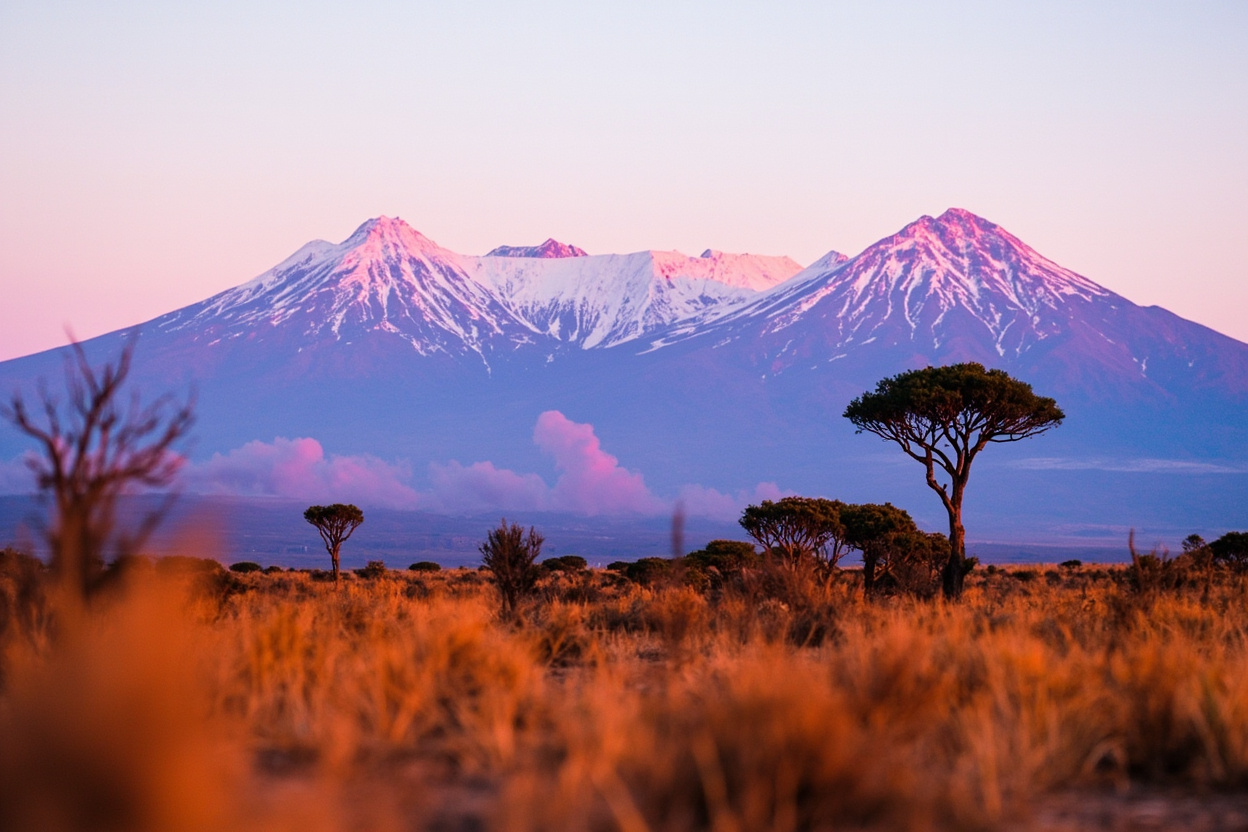
Kilimanjaro is the headline act — Africa’s highest point, 5,895 m, six routes, a global checklist tick. Mount Meru, ninety minutes’ drive away, tops out at 4,566 m and almost nobody outside Tanzania has heard of it. Both are excellent climbs. They are not the same trip.
The short version
- Kilimanjaro if you want the summit, the photo, and the stamps. Six to nine days. Crowded on the popular routes.
- Meru if you want a serious mountain, raw scenery, and almost no other trekkers. Three to four days. Wildlife on the lower flanks (ranger with a rifle escorts day one).
- Both, in sequence if you have ten days and want to acclimatise on Meru before tackling Kibo. This is what most of our guides did themselves.
Difficulty
Kilimanjaro is a long, steady walk that punishes you with altitude on summit night. The terrain is non-technical. The challenge is the seven-hour midnight push from Barafu (4,673 m) to Uhuru (5,895 m) on thin air and thinner sleep. Success rate on a properly paced 7+ day route is around 85%.
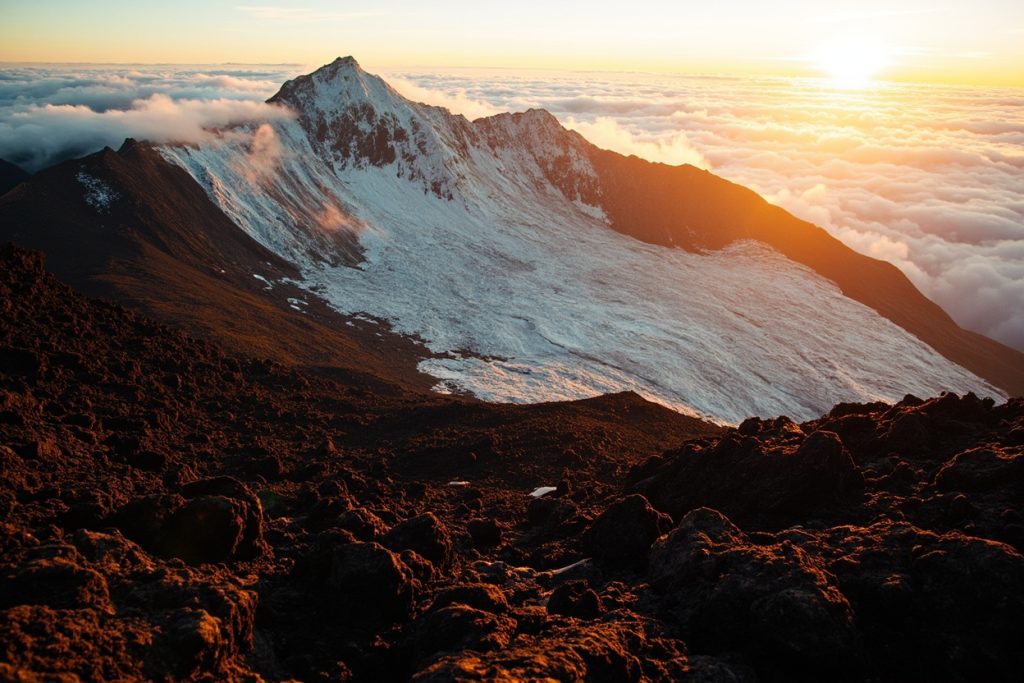
Meru is steeper and more varied — there is a genuine knife-edge ridge on the final approach to Socialist Peak, and the summit night is a cold, exposed scramble with two sections of easy hands-on rock. The altitude is more forgiving but the trail is harder underfoot.
Scenery
Kilimanjaro takes you through five climate zones in a week — rainforest, heath, moorland, alpine desert, arctic summit. It is a remarkable cross-section. Meru is more concentrated: dense forest with buffalo and colobus monkeys, then a narrow knife-edge crater rim with Kibo dominating the eastern horizon at sunrise. Many returning climbers say the Meru summit view of Kilimanjaro is the best photograph of the whole trip.
Cost & logistics
Park fees and porter wages set a floor under Kilimanjaro pricing — a 7-day Machame climb starts around US$2,200 per person on a small group, rising sharply for private climbs and longer routes. Meru costs roughly half — US$900 to US$1,300 for the standard 4-day climb, including park fees, hut accommodation, ranger fees, and a guide.
A word on porters
The single most important question to ask any operator — us included — is whether they are KPAP-registered and pay porter wages above the legal minimum. If they hesitate, walk away. Cheap Kilimanjaro climbs are cheap because someone is being underpaid to carry your tent.
Climbing Kili is a serious commitment. We will tell you honestly whether your fitness and timeline match the route you have in mind. See the Machame route →