Author: plugindev

  • When to visit Tanzania: a month-by-month safari calendar

    When to visit Tanzania: a month-by-month safari calendar

    “When should I come?” is the first question every guest asks. The honest answer: it depends on what you want to see and how much you want to share the road. Here is the Tanzania year as our guides experience it, month by month.

    The two big seasons

    Tanzania has a long dry season (June–October) and a long wet season (March–May), with two transitional shoulders. The dry months are the classic safari window — sparse vegetation, animals concentrated at water, dust-soft afternoon light. The wet months are quieter, greener, and dramatically cheaper, with newborn wildlife and migratory birds arriving from Europe and Asia.
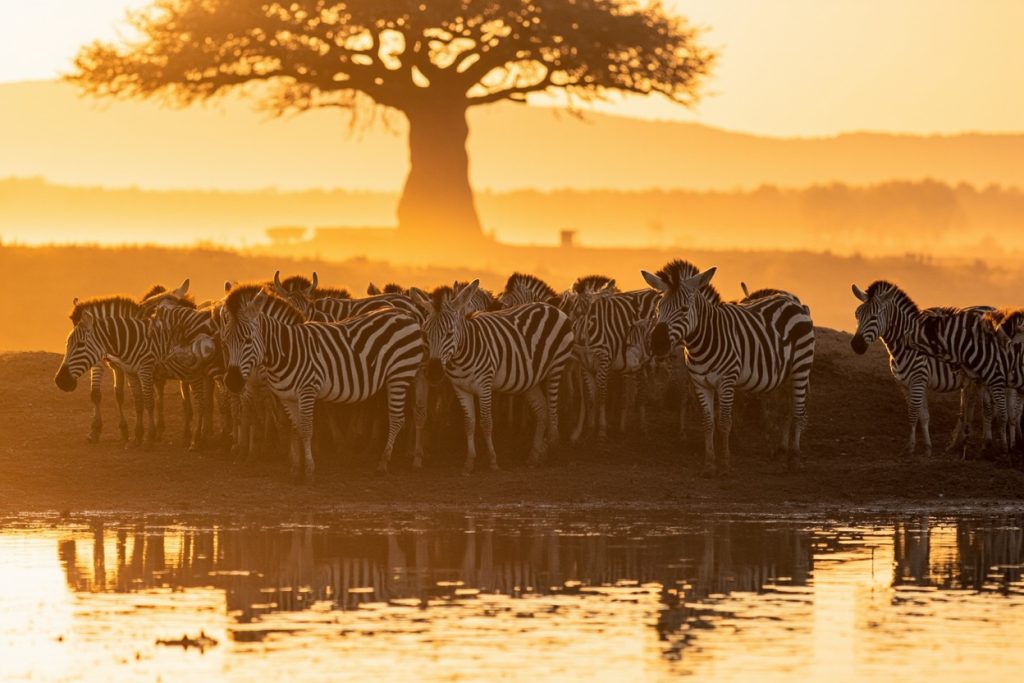
    Zebras drinking at a small waterhole in Tarangire National Park, baobab tree behind them, late afternoon light.
    Tarangire in late dry season — elephants and zebra cluster at the last waterholes before the short rains.

    January – February: calving on the southern Serengeti

    Half a million wildebeest calves are born across about three weeks on the short-grass plains around Ndutu. Predators follow the herds. It is the best window of the year for big-cat action and arguably the most photogenic on the calendar. Days are warm, evenings cool, occasional short showers.

    March – May: the long rains

    Rates drop, lodges empty, and the country turns emerald green. Game viewing is harder because the grass is tall and animals are scattered, but birding is exceptional and the Ngorongoro Crater stays excellent year-round. April is the wettest month — some bush camps close. If your budget is tight and you do not mind muddy roads, May is a hidden gem.

    June – July: dry season opens, herds head north

    The roads firm up, the air clears, and the wildebeest column starts its run toward the western corridor and the Grumeti River. June is our pick for travellers who want classic dry-season game viewing without August prices. Cool nights — pack a fleece for early-morning drives.

    August – September: peak migration, peak crowds

    The Mara River crossings happen in this window, mostly on the Tanzanian side. Visibility is at its absolute best. Lodges fill 9–12 months ahead, and prices peak. Book early or pivot to a less-trafficked circuit — Tarangire and Ruaha are excellent in this window and far quieter.

    October – early November: the quiet sweet spot

    The crowds thin, the migration is somewhere in the northern Serengeti, and the heat builds. October is one of the most underrated months on the calendar — dry, dramatic, and noticeably cheaper than August.

    Mid-November – December: the short rains

    Brief afternoon thunderstorms, glorious skies, almost no other vehicles in the parks. The grass greens up, the herds drift south again, and predators reposition. A genuinely lovely time to travel for those who do not mind getting their boots wet.

    Quick picks

    • Big cats & calving: late January through February
    • River crossings: late July through early October
    • Birding: November through April
    • Best value: early June, late October, mid-November
    • Kilimanjaro climbs: January–February or July–October (drier, clearer)

    Not sure which window suits you? Send us your dates and we will tell you honestly what you will and will not see. Plan your safari →
  • The Great Migration river crossings: a field guide

    The Great Migration river crossings: a field guide

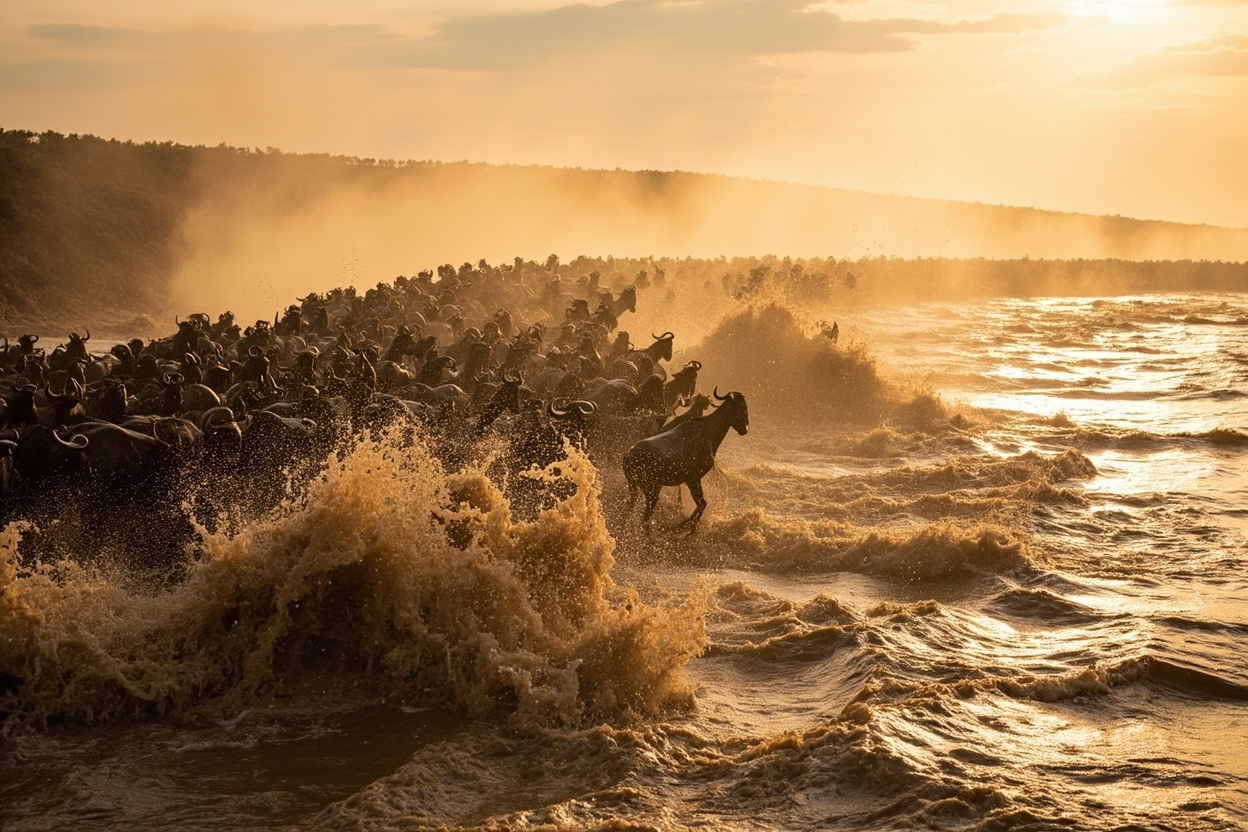
    A wildebeest crossing on the Mara River is part wildlife event, part theatre. Two thousand animals can mass on a bank for an hour and turn back. Then, in the space of forty seconds, the lead breaks and the entire column pours into the water.

    When and where

    The crossings happen in the northern Serengeti, mostly between Kogatende and the Kenyan border, from late July to early October. The herds zigzag across the river — sometimes two or three times in a week — chasing grass that has just been refreshed by rain on the other side. There is no fixed schedule. Guides watch the bank for “build-up” — animals collecting at the lip, drinking nervously, pacing.

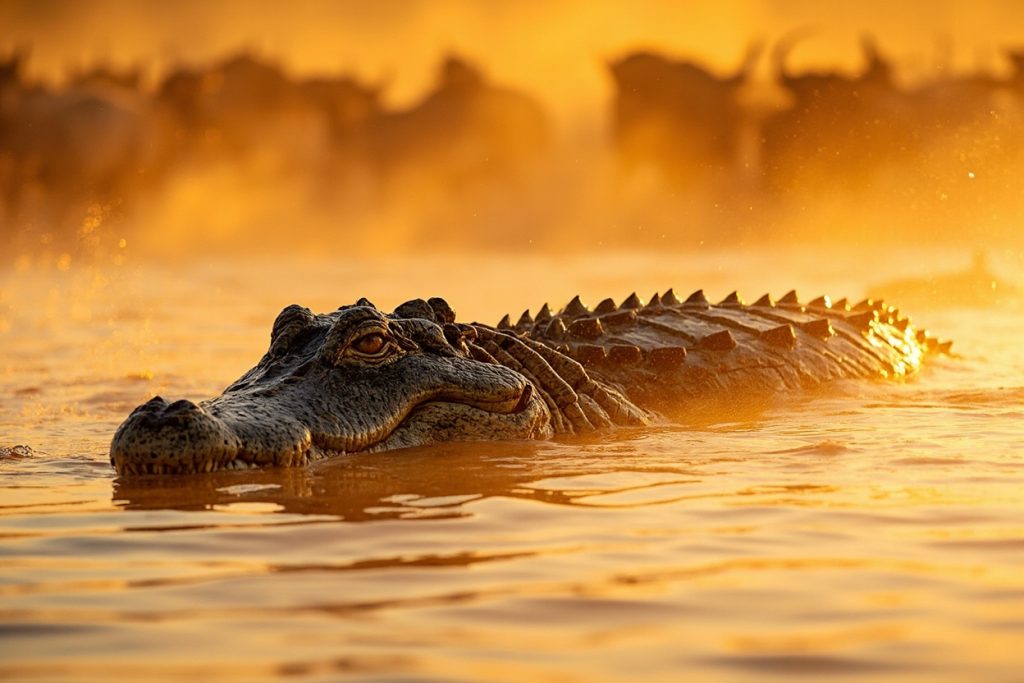
    Nile crocodile partly submerged in the Mara River, eyes and ridged back above water.
    A Mara crocodile waits motionless in the shallows. Crossings can take minutes — or two hours of stalemate before the herd commits.

    How to actually see one

    Three things matter more than luck:

    1. Be in the right camp. A camp at Kogatende, Lamai, or Wogakuria puts you ten to thirty minutes from the active crossing points. A camp two hours south will arrive after the river has cleared.
    2. Stay long enough. Three nights is the minimum that gives you a fair chance. We recommend four. With one night you are gambling.
    3. Trust your guide on patience. The herd will mass, retreat, mass, retreat, and mass again. Most vehicles leave after the second retreat. The good guides stay.

    Crossing etiquette

    The Tanzanian park authority enforces clear rules — for the animals, not the photographers. Vehicles park back from the bank. Engines off. No one steps out. No one shouts. A stressed herd will not commit, and a crossing that does not happen costs a lion family that night’s meal.

    What to bring

    • A long lens — 200mm minimum, 400mm if you have it. Crossings happen across a river, not next to you.
    • A second body or a phone for wide context shots. The texture of the herd is the picture.
    • Patience and water. You may sit at a build-up for three hours.

    We design migration trips around the herd’s likely position the week of your travel — not a brochure date. See the classic 7-day route →

  • Kilimanjaro vs. Mount Meru: which climb is right for you?

    Kilimanjaro vs. Mount Meru: which climb is right for you?

    Kilimanjaro is the headline act — Africa’s highest point, 5,895 m, six routes, a global checklist tick. Mount Meru, ninety minutes’ drive away, tops out at 4,566 m and almost nobody outside Tanzania has heard of it. Both are excellent climbs. They are not the same trip.

    The short version

    • Kilimanjaro if you want the summit, the photo, and the stamps. Six to nine days. Crowded on the popular routes.
    • Meru if you want a serious mountain, raw scenery, and almost no other trekkers. Three to four days. Wildlife on the lower flanks (ranger with a rifle escorts day one).
    • Both, in sequence if you have ten days and want to acclimatise on Meru before tackling Kibo. This is what most of our guides did themselves.
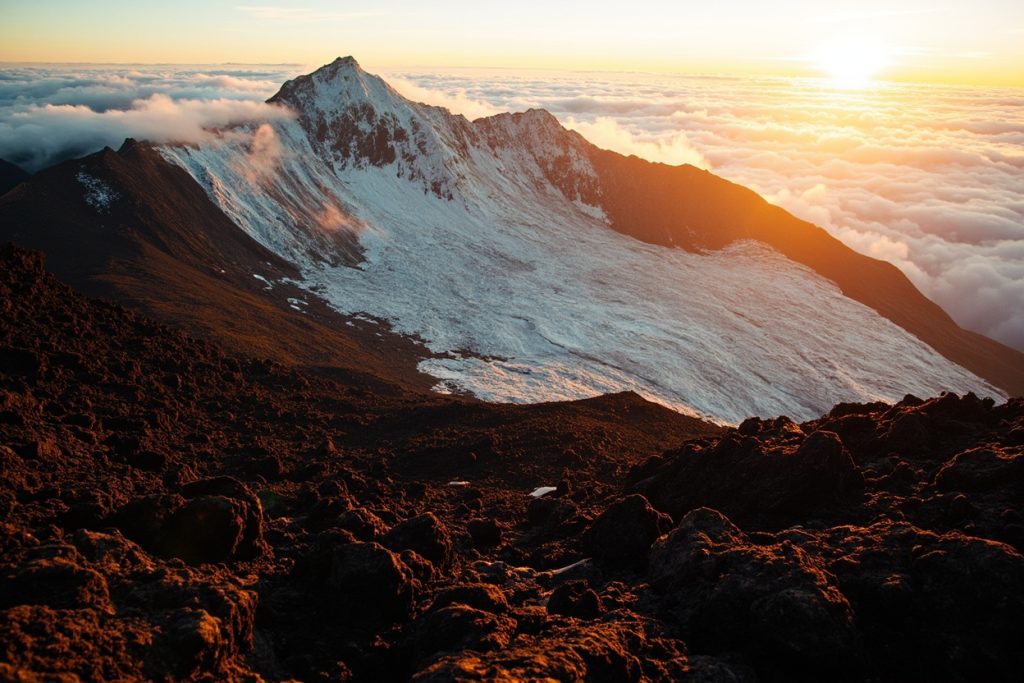
    High-altitude view of the Kibo glaciers and crater rim of Kilimanjaro at first light.
    First light on the Kibo glaciers — about an hour past the Stella Point sign on summit night.

    Difficulty

    Kilimanjaro is a long, steady walk that punishes you with altitude on summit night. The terrain is non-technical. The challenge is the seven-hour midnight push from Barafu (4,673 m) to Uhuru (5,895 m) on thin air and thinner sleep. Success rate on a properly paced 7+ day route is around 85%.

    Meru is steeper and more varied — there is a genuine knife-edge ridge on the final approach to Socialist Peak, and the summit night is a cold, exposed scramble with two sections of easy hands-on rock. The altitude is more forgiving but the trail is harder underfoot.

    Scenery

    Kilimanjaro takes you through five climate zones in a week — rainforest, heath, moorland, alpine desert, arctic summit. It is a remarkable cross-section. Meru is more concentrated: dense forest with buffalo and colobus monkeys, then a narrow knife-edge crater rim with Kibo dominating the eastern horizon at sunrise. Many returning climbers say the Meru summit view of Kilimanjaro is the best photograph of the whole trip.

    Cost & logistics

    Park fees and porter wages set a floor under Kilimanjaro pricing — a 7-day Machame climb starts around US$2,200 per person on a small group, rising sharply for private climbs and longer routes. Meru costs roughly half — US$900 to US$1,300 for the standard 4-day climb, including park fees, hut accommodation, ranger fees, and a guide.

    A word on porters

    The single most important question to ask any operator — us included — is whether they are KPAP-registered and pay porter wages above the legal minimum. If they hesitate, walk away. Cheap Kilimanjaro climbs are cheap because someone is being underpaid to carry your tent.


    Climbing Kili is a serious commitment. We will tell you honestly whether your fitness and timeline match the route you have in mind. See the Machame route →

  • Beyond the Big Five: twelve underrated sightings

    Beyond the Big Five: twelve underrated sightings

    First-time safari-goers chase the Big Five — lion, leopard, elephant, buffalo, rhino. They should. They are extraordinary animals. But ask a guide on his fifth season what made his last week, and the answer is almost never on that list.

    The dozen we look for

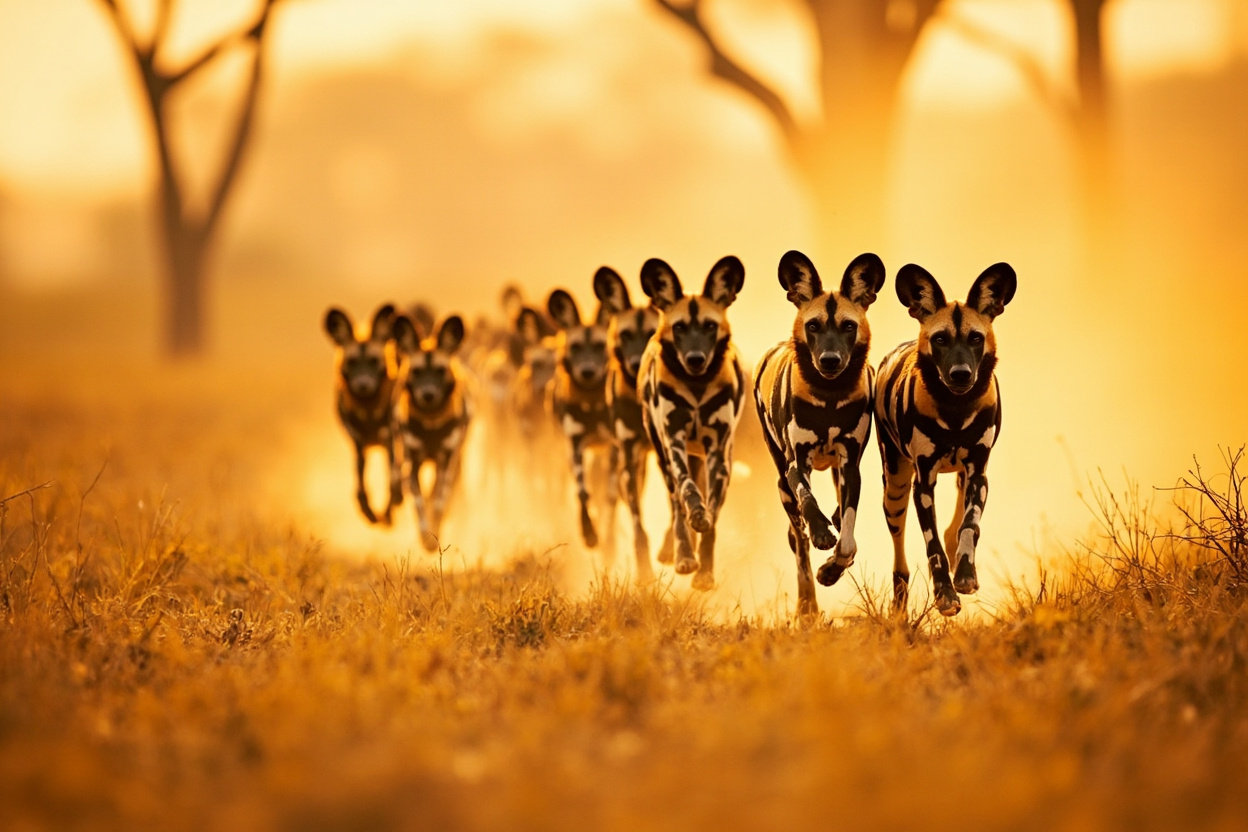
    1. African wild dog — also called painted hunting dog. Pack hunter, near-perfect kill rate, almost never seen. Best chance: Nyerere/Selous and Ruaha.
    2. Serval cat — slim, leggy, gold spotted, pounces from tall grass. Crepuscular. The good guides find one a week.
    3. Caracal — even harder than serval. Tufted ears, ambush hunter. Ngorongoro and Tarangire have the best record.
    4. Aardwolf — termite-eating member of the hyena family. Mostly nocturnal. Spot one and your guide will text every guide they know.
    5. Honey badger — wildlife’s reigning lunatic. Will fight a lion. Brief sightings on night drives at conservancy lodges.
    6. Pangolin — the holy grail. Most guides go years between sightings.
    7. Bat-eared fox — pair-bonded, oversized ears, hunts beetles by sound. Common but easy to miss in the long grass.
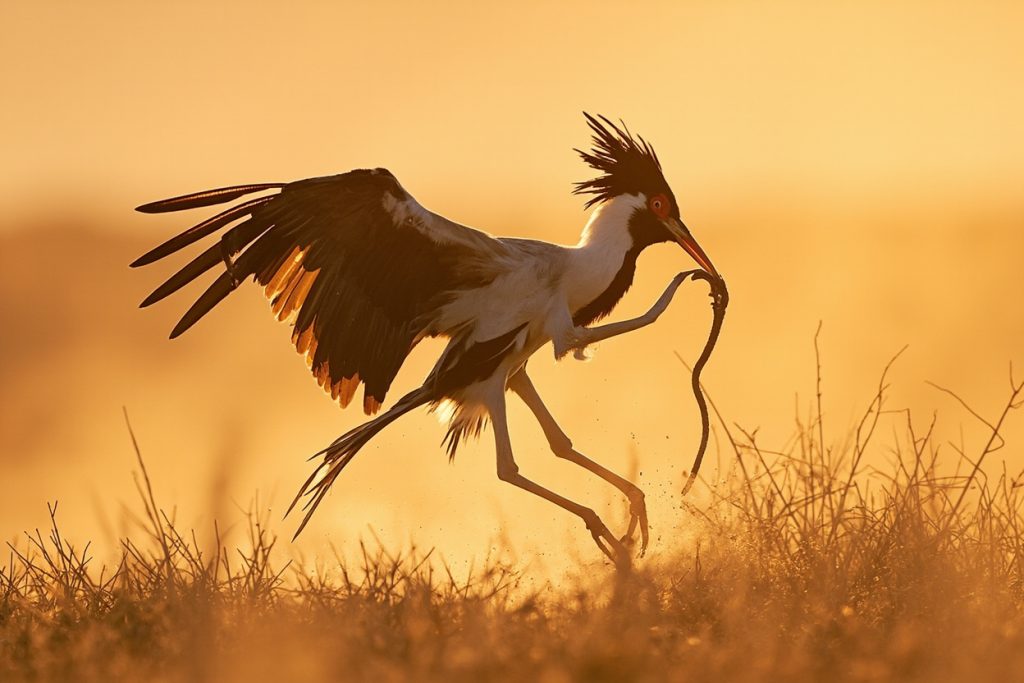
    8. Secretary bird — three-foot-tall raptor that kills snakes on foot. Strikes in 400 milliseconds.
    9. Kori bustard — Africa’s heaviest flying bird. Look for the slow, deliberate walk in open grassland.
    10. Lilac-breasted roller — the cliché everyone underrates until they see one in flight at sunset.
    11. Klipspringer — tiny rock-dwelling antelope that walks on its toenails. Ngorongoro rim and Lobo kopjes.
    12. Striped hyena — rarer cousin of the spotted hyena, mostly nocturnal, the rarest large carnivore most guides have ever seen.
    Secretary bird mid-strike on a snake in dry grass, long legs in motion blur.
    A secretary bird mid-strike — they kill snakes by stomping. Four-hundred millisecond strikes; you blink, you miss it.

    Why this list matters

    The Big Five list was coined by hunters in the early twentieth century — it is a list of the most dangerous animals to shoot on foot. It tells you nothing about which animals are interesting, rare, or behaviourally fascinating. The species above will not feature on a postcard, but they are the ones that turn a good safari into a lifetime story.

    How to improve your odds

    • Pick the right park. Ruaha and Nyerere outperform the northern circuit on wild dog and serval.
    • Stay in conservancies that allow night drives — most national parks do not.
    • Tell your guide on day one that you care about the small stuff. They will plan the day differently.
    • Slow down. Most rare sightings come from sitting at one waterhole for an hour rather than driving past five.

    If you are on your second or third safari and want a less-trodden route, talk to us. We build slower trips for repeat travellers. Plan your safari →